
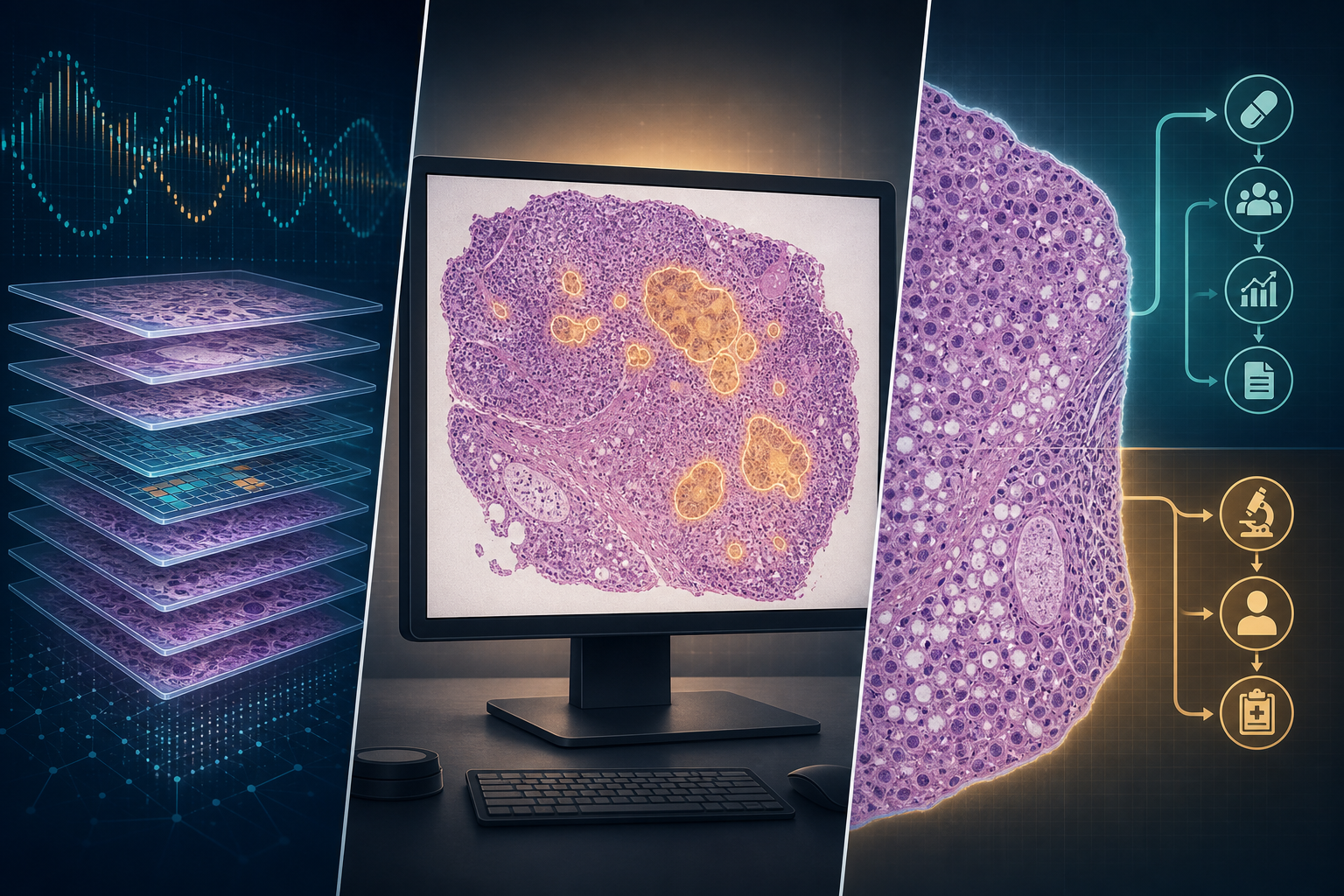
 Paige Predict, AISight Dx, AIM-MASH AI Assist, FullFocus, Paige PanCancer Detect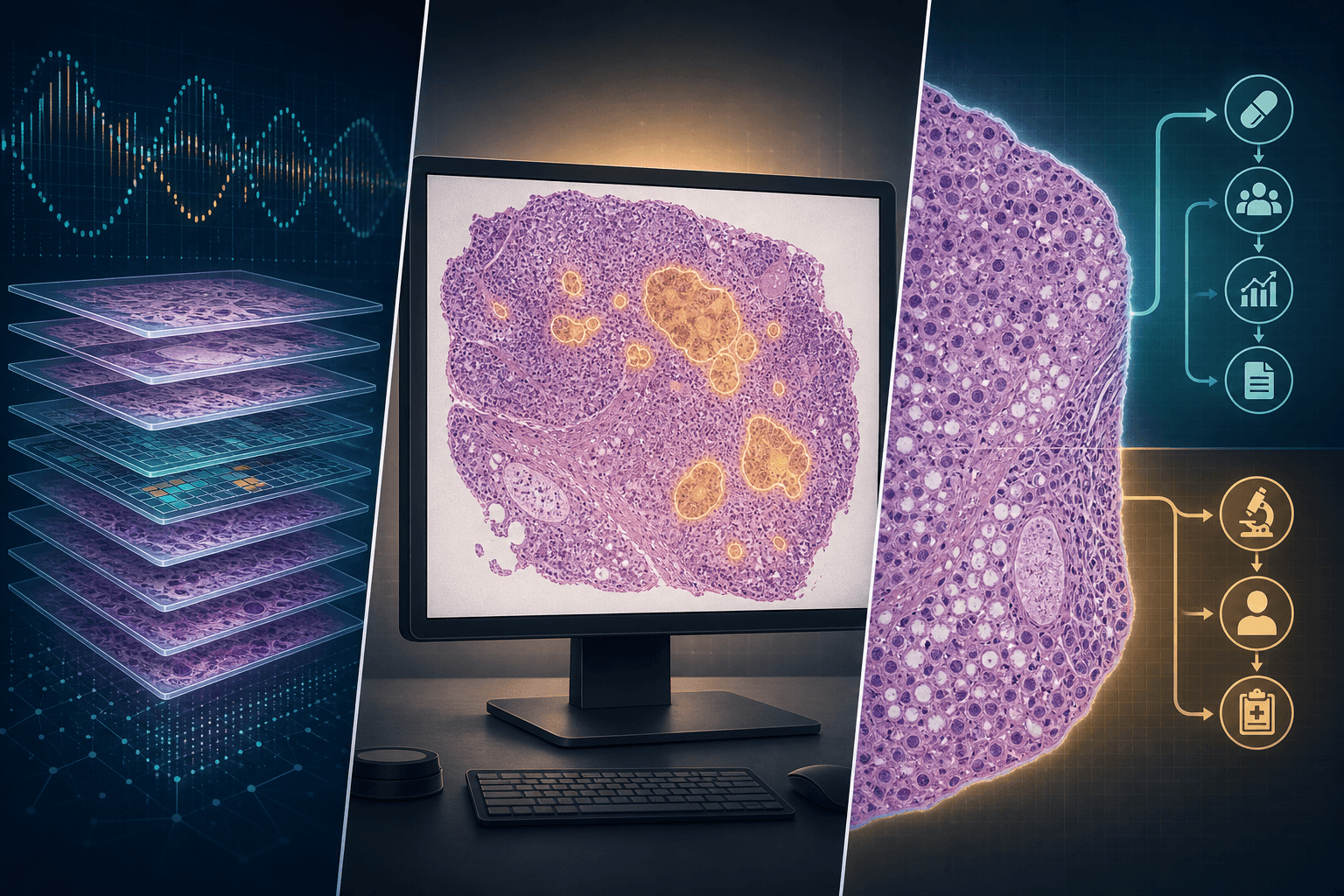
Computational Pathology AI: Sector Overview and Consolidation Dynamics
Computational pathology AI — software that analyzes digitized whole-slide images (WSI) to assist with cancer detection, biomarker prediction, and clinical trial endpoint assessment — has moved from a fragmented early-stage landscape to a consolidating market defined by two operating models. As of Q2 2026, the three organizations that shaped the field's regulatory and commercial trajectory are Paige (now a Tempus subsidiary), Tempus AI's digital pathology division, and PathAI.
Market size estimates for AI in pathology vary materially by source and methodology. Grand View Research places the 2025 market at approximately $168.25 million, while MarketsandMarkets estimates $107.4 million for the same year. Both firms project compound annual growth rates in the 25–27% range through the late 2020s, driven primarily by pathologist workforce shortages and the gradual buildout of whole-slide imaging infrastructure in academic medical centers and reference laboratories. Readers should treat these figures as directional estimates rather than precise measurements — the discrepancy reflects differing definitions of what constitutes an AI-in-pathology product and which revenue streams are included.
The structural adoption driver is not primarily technological. Pathologist supply has not kept pace with diagnostic demand, particularly in oncology, where precision medicine workflows require increasingly granular tissue characterization. Whole-slide imaging systems — the hardware prerequisite for deploying any of the software platforms profiled here — have achieved sufficient penetration at major academic and reference lab sites to make clinical deployment feasible, though community hospital adoption remains uneven.
The consolidation narrative that frames all three profiles is straightforward: Paige, the field's regulatory pioneer, exited via acquisition at a valuation representing less than 34 cents on the dollar of its disclosed funding. That outcome shaped both remaining players' strategies — Tempus absorbed Paige's regulatory portfolio and data assets into a broader multimodal oncology platform, while PathAI pursued a parallel track that pairs biopharma services with clinical diagnostics distribution through reference lab partnerships rather than direct lab ownership.
Paige AI: Regulatory Firsts, Funding History, and Acquisition by Tempus
Paige was founded in 2017 as a spinout from Memorial Sloan Kettering Cancer Center, with access to MSK's pathology archive as a founding data asset. The company's regulatory trajectory established the framework that all subsequent computational pathology AI developers have operated within.
Regulatory Milestones
Paige's most consequential regulatory achievement was the De Novo marketing authorization for Paige Prostate Detect (DEN200080), granted by FDA on September 21, 2021. This was the first FDA marketing authorization ever granted for an AI-based pathology device, and it established product code QPN — the regulatory precedent that subsequent 510(k) submissions from Paige and competitors have referenced. For device-level clinical study design, reader performance metrics, and the De Novo decision criteria, see the Paige Prostate (DEN200080) FDA De Novo Authorization Record on this site.
Beyond the De Novo, Paige accumulated a regulatory portfolio that included Breakthrough Device Designations for Paige Prostate Detect, Paige Lymph Node (breast cancer lymph node metastasis detection), and — in April 2025, under Tempus ownership — Paige PanCancer Detect, the first Breakthrough Device Designation granted for an AI tool designed to identify both common cancers and rare variants across multiple anatomic sites. The FullFocus whole-slide image viewer received two 510(k) clearances: K201005 (Philips IntelliSite UFS scanner) and K241273 (Leica Aperio GT 450 DX and Hamamatsu NanoZoomer S360MD, cleared January 14, 2025).
Funding History
| Round | Year | Amount | Notes |
|---|---|---|---|
| Seed / Early Rounds | 2017–2018 | Not publicly disclosed | MSK spinout; initial institutional backing |
| Series A | 2019 | Not publicly disclosed | Early commercial development |
| Series B | 2020 | Not publicly disclosed | Platform expansion |
| Series C and prior total | Through 2021 | $241M across 8 rounds (disclosed total) | Last publicly disclosed financing round |
| Acquisition by Tempus | August 2025 | $81.25M | Paid predominantly in Tempus common stock plus assumption of Microsoft Azure cloud services agreement |
Paige's exit valuation of $81.25 million — paid predominantly in Tempus common stock, with Tempus also assuming Paige's Microsoft Azure cloud services commitment — represented less than 34% of the company's disclosed funding. The acquisition was announced in August 2025. No public financing round had been disclosed after 2021, suggesting that the gap between the last known funding and the acquisition price reflects both the passage of time without a new capital raise and the structural difficulty of building a standalone commercial business in computational pathology AI.
Strategic Rationale for the Tempus Acquisition
From Tempus's perspective, the Paige acquisition delivered three assets that would have been difficult to replicate organically: nearly 7 million digitized pathology slide images from 45 countries spanning diverse patient populations; Paige's foundation model trained on 1 million slides; and Paige's regulatory portfolio, including the De Novo precedent, Breakthrough Device Designations, and the FullFocus viewer clearances. Tempus CEO Eric Lefkofsky described the deal as substantially accelerating the company's effort to build the largest foundation model in oncology.
Tempus AI — Digital Pathology Division: Post-Acquisition Integration and New Products
This section covers Tempus's digital pathology division exclusively, scoped to the post-acquisition period beginning August 2025. For Tempus's genomics diagnostics business — including xT, xR, and xF NGS assays, the precision oncology evidence base, and class-action litigation — see the Tempus AI Company Profile: Genomics, FDA Regulatory Record, and Clinical Evidence in Precision Oncology.
Integration Strategy and Data Assets
Tempus's integration strategy centers on combining Paige's pathology data and foundation model with Tempus's existing multimodal oncology dataset — which includes genomic sequencing data, clinical records, and imaging data across a large patient cohort. The stated ambition is to build a multimodal foundation model for oncology that links molecular, clinical, and pathology signals from the same patient populations. The 7-million-slide archive from 45 countries is particularly significant because it provides population diversity that single-institution training datasets cannot replicate.
Paige Predict: Launch and Capabilities
Tempus launched Paige Predict on January 21, 2026. The product analyzes a single H&E-stained whole-slide image to predict the likely presence or absence of 123 biomarkers and oncogenic molecular pathways across 16 cancer types, including non-small cell lung cancer, prostate, breast, pancreatic, and colorectal cancers. It is built on Paige's foundation model and a combined Tempus-Paige multimodal cohort of over 200,000 de-identified patients.
The clinical problem Paige Predict addresses is tissue scarcity — the "quantity not sufficient" (QNS) scenario in which available biopsy material is insufficient to run all desired molecular tests. By predicting likely biomarker status from the H&E slide before committing tissue to specific assays, the product is designed to help clinicians prioritize which confirmatory tissue-based tests to order first, preserving limited sample for the highest-yield tests.
IMS Open-Source Consortium
On June 3, 2026, Tempus announced the launch of the IMS Open-Source Consortium, with Yale New Haven Health and Memorial Sloan Kettering Cancer Center as founding members. The consortium open-sources the Paige Image Management System (IMS), the FullFocus whole-slide image viewer, the FullFolio case management software, and AI software modules. The stated goal is to enable academic medical centers and industry partners to build on a shared digital pathology infrastructure rather than developing parallel proprietary systems.
The open-source strategy is notable because it converts infrastructure components — the viewer and case management software — into shared public goods while Tempus retains its proprietary position in the AI models and multimodal data assets layered on top. This approach mirrors patterns seen in other enterprise AI markets where platform commoditization at the infrastructure layer drives adoption that benefits the proprietary AI layer.
PathAI: Company Profile, Funding, and Regulatory Milestones Through Q2 2026
PathAI was founded in 2016. The company has pursued a dual-track strategy that distinguishes it from both Paige and Tempus: a biopharma-services track focused on clinical trial support and drug development tools, and a clinical-diagnostics track built on reference lab partnerships rather than direct lab ownership.
Corporate History and Funding
PathAI's most significant financing event was its Series C, which closed on May 18, 2021, raising $165 million. The round was co-led by D1 Capital Partners and Kaiser Permanente. Financial investors included General Atlantic, Tiger Global Management, 8VC, Adage, Biospring Partners, General Catalyst, KdT Ventures, Polaris Partners, and Refactor Capital. Strategic investors included Bristol-Myers Squibb, Labcorp, and the Merck Global Health Innovation Fund — a roster that reflects PathAI's biopharma services orientation and the strategic value those companies placed on AI-assisted pathology for their respective drug development and diagnostics operations.
No public financing round has been disclosed after the 2021 Series C. Total disclosed funding is approximately $230 million or more, depending on how earlier seed and Series A/B rounds are counted, but no precise post-Series C total has been confirmed from a citable source. PathAI's entry into clinical diagnostics came through the 2021 acquisition of Poplar Healthcare, a Memphis-based anatomic pathology laboratory, which gave the company a direct clinical diagnostics operation.
AISight Dx Platform: FDA Clearance History
PathAI's clinical diagnostics platform, AISight Dx, received its initial FDA 510(k) clearance in 2022 and a CE-IVD mark for European markets. The more significant regulatory event came on June 30, 2025, when FDA cleared an expanded 510(k) (K243391) for AISight Dx for primary diagnosis — meaning the platform can be used as the primary diagnostic tool rather than only as a secondary review aid.
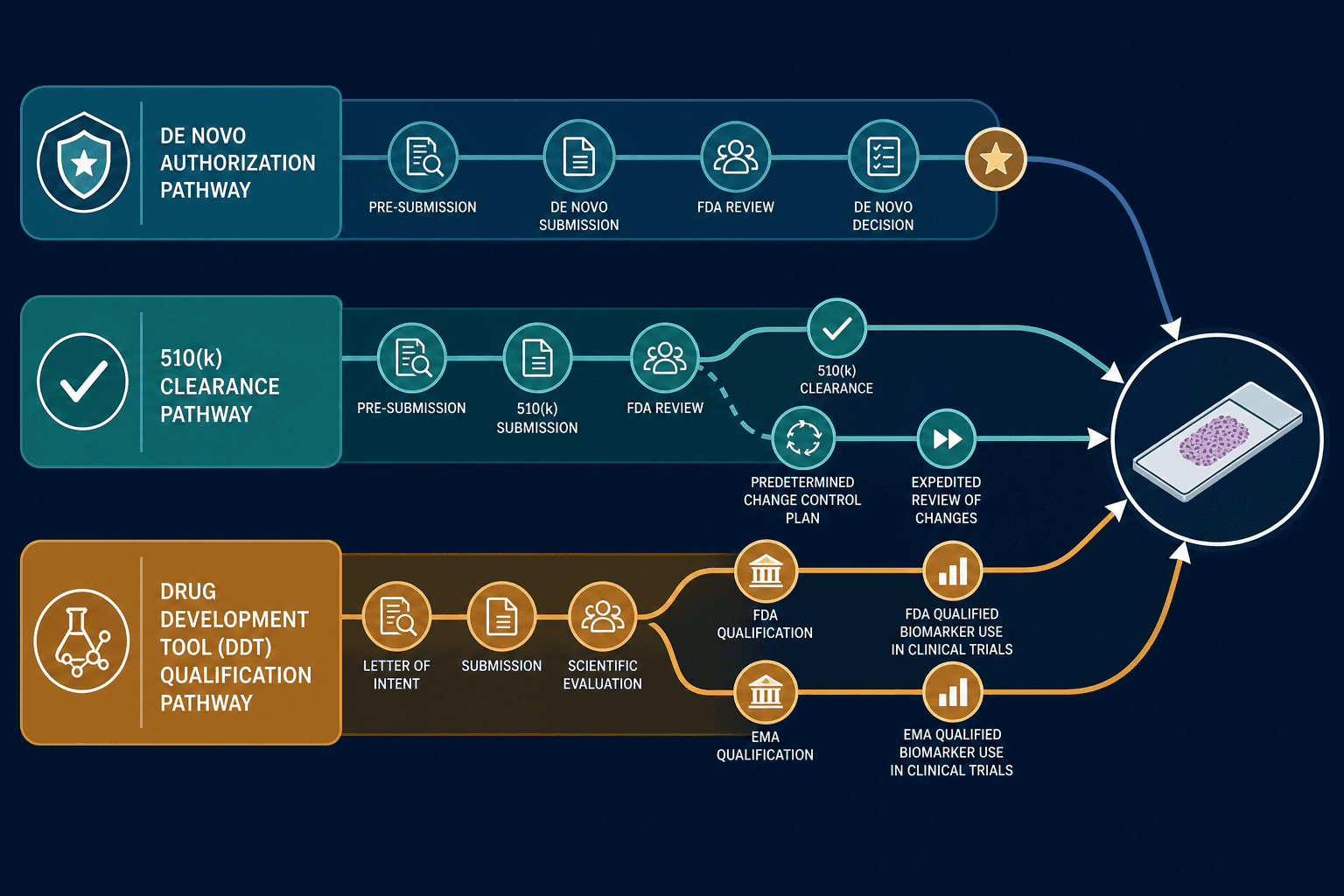
The June 2025 clearance is specifically authorized for use with two scanner systems: the Hamamatsu NanoZoomer S360MD and the Leica Aperio GT 450 DX. Critically, this clearance includes a Predetermined Change Control Plan (PCCP), which allows PathAI to validate and implement specified major changes — including additional scanners, displays, file formats, and browsers — without requiring new 510(k) submissions for each change. This is a meaningful procurement consideration: institutions evaluating AISight Dx can expect future hardware compatibility expansions to proceed without the regulatory delays that would otherwise accompany each new scanner integration.
| Clearance | Submission No. | Date | Scope | Key Feature |
|---|---|---|---|---|
| AISight Dx initial clearance | Not publicly specified | 2022 | Digital pathology workflow platform | CE-IVD mark also granted |
| AISight Dx expanded clearance | K243391 | June 30, 2025 | Primary diagnosis; Hamamatsu NanoZoomer S360MD and Leica Aperio GT 450 DX | Includes PCCP for future scanner/display additions without new submissions |
Precision Pathology Network
PathAI launched the Precision Pathology Network in 2025 as a clinical infrastructure initiative connecting pathology laboratories, health systems, and biopharma partners on a shared digital pathology platform. The network is designed to facilitate slide sharing, remote consultation, and AI-assisted case review across institutional boundaries — a capability that becomes more valuable as reference lab partnerships (Quest, Labcorp) expand the platform's geographic reach.
PathAI's Biopharma Track: AIM-MASH AI Assist and the DDT Qualification Milestone
On December 9, 2025, FDA qualified PathAI's AIM-MASH AI Assist through the Drug Development Tool (DDT) Biomarker Qualification Program — making it the first AI-powered pathology DDT qualified by FDA. EMA's Committee for Medicinal Products for Human Use (CHMP) had granted qualification earlier in 2025, though the exact EMA qualification date has not been confirmed in publicly available PathAI communications.
What DDT Qualification Means
FDA's DDT Biomarker Qualification Program is a formal process through which a biomarker tool — in this case, an AI-based pathology assessment — is reviewed and qualified for a specific context of use in drug development. Once qualified, drug developers may use the DDT for that context of use in IND, NDA, and BLA submissions without resubmitting the underlying DDT validation data. This reduces regulatory burden for each sponsor that uses the tool, which is the commercial value proposition for PathAI's biopharma partners.
Validation Data and Performance
AIM-MASH AI Assist was validated across more than 1,400 clinical trial biopsies. PathAI reports that the tool demonstrated superiority to individual expert manual reads for ballooning and inflammation scoring — two of the histological features used in MASH clinical trial enrollment and endpoint assessment — and achieved 100% repeatability on repeat assessments of the same slides. The repeatability metric is particularly relevant for clinical trial use, where inter-reader variability in manual pathology assessment has historically been a source of endpoint noise in MASH trials.
PathAssist Derm: Pipeline Signal
In 2026, PathAI received an FDA Breakthrough Device Designation for PathAssist Derm, an AI tool for analysis of whole-slide images of skin lesions. This designation indicates FDA has agreed that the device addresses an unmet need and is eligible for expedited review, but it does not constitute marketing authorization. PathAssist Derm represents PathAI's first publicly disclosed pipeline product outside of liver pathology and general anatomic pathology.
PathAI's Commercial Partnerships: Quest Diagnostics, Labcorp, and the Clinical Diagnostics Footprint
PathAI's clinical diagnostics distribution strategy has shifted from direct lab ownership to platform licensing through the two largest independent clinical laboratory networks in the United States.
Quest Diagnostics Partnership (2024)
In 2024, Quest Diagnostics acquired the PathAI Diagnostics laboratory assets in Memphis, Tennessee — the former Poplar Healthcare operation — for approximately $100 million. As part of the transaction, Quest licensed the AISight Dx platform. PathAI exited direct laboratory ownership while retaining the platform and its licensing revenue stream. This structure allows PathAI to scale clinical diagnostics deployment through Quest's national laboratory network without the capital requirements and operational complexity of running laboratory facilities.
Labcorp Expansion (February 2026)
On February 25, 2026, Labcorp expanded its PathAI collaboration to deploy AISight Dx across its anatomic pathology laboratories and hospital sites nationwide. The deployment covers primary diagnosis case management, slide review, collaboration, and annotation workflows. Labcorp had first invested in PathAI in 2019 and expanded its clinical trials collaboration in 2021; the 2026 agreement converts that relationship into a full clinical deployment partnership. Labcorp was also a strategic investor in PathAI's 2021 Series C.
| Partner | Relationship Type | Year | Scope |
|---|---|---|---|
| Labcorp | Investment | 2019 | Initial strategic investment |
| Labcorp | Clinical trials collaboration expansion | 2021 | Series C strategic investor; expanded CRO collaboration |
| Quest Diagnostics | Lab asset acquisition + platform license | 2024 | Acquired PathAI Diagnostics Memphis lab (~$100M); licensed AISight Dx |
| Labcorp | Nationwide clinical deployment | February 2026 | AISight Dx deployed across anatomic pathology labs and hospital sites for primary diagnosis |
The combined Quest and Labcorp deployments give AISight Dx a national clinical diagnostics footprint without PathAI bearing the cost of laboratory operations. Whether this platform-licensing model generates sufficient revenue to sustain PathAI's biopharma and R&D operations without additional external financing is not publicly disclosed.
Comparative Analysis: Regulatory Strategies, Business Models, and Data Approaches
The two remaining operating models in computational pathology AI differ across regulatory strategy, data approach, and commercial architecture in ways that are relevant to procurement teams, biopharma decision-makers, and health system administrators.
| Dimension | Tempus AI (Digital Pathology Division) | PathAI |
|---|---|---|
| Regulatory pathway strategy | De Novo (Paige Prostate, established QPN product code); Breakthrough Device Designations; 510(k) expansions for FullFocus viewer | 510(k) for clinical diagnostics (AISight Dx, including PCCP for future expansions); DDT qualification for biopharma use (AIM-MASH AI Assist); Breakthrough Device Designation pipeline (PathAssist Derm) |
| Primary business model | Integrated multimodal oncology platform — pathology data combined with genomics, clinical records; foundation model development | Dual-track: biopharma services (DDT-qualified tools, clinical trial support) + clinical diagnostics (platform licensing to Quest, Labcorp) |
| Data strategy | Scale and multimodality — 7M+ slides from 45 countries; 1M-slide foundation model; multimodal patient cohort (200K+ for Paige Predict) | Annotation depth — 32.5M+ annotations from 450+ pathologist network; validated specifically for MASH and oncology biopharma contexts |
| Clinical diagnostics distribution | Direct product development; IMS Consortium for infrastructure sharing | Platform licensing through Quest Diagnostics and Labcorp; exited direct lab ownership in 2024 |
| Biopharma services | Paige Predict as biomarker prediction tool; multimodal oncology data for research | AIM-MASH AI Assist (FDA/EMA DDT qualified); purpose-built clinical trial support infrastructure |
| M&A trajectory | Acquired Paige (August 2025, $81.25M) to gain data assets and regulatory portfolio | Sold PathAI Diagnostics lab assets to Quest (~$100M, 2024); retained platform; no disclosed acquisitions |
| Open-source activity | IMS, FullFocus, FullFolio, AI modules open-sourced via IMS Consortium (June 2026) | No publicly disclosed open-source infrastructure initiatives |
| Company stage | Public company (NASDAQ: TEM); digital pathology is one division of a broader oncology AI business | Private; last disclosed financing was 2021 Series C ($165M) |
Regulatory Pathway Differentiation
The three regulatory pathways represented in this sector — De Novo authorization, 510(k) with PCCP, and DDT qualification — serve fundamentally different purposes and should not be conflated in procurement or policy analysis. The De Novo pathway established the product code and regulatory precedent for AI pathology devices. The 510(k) with PCCP represents a maturation of that framework, allowing iterative product updates without repeated full submissions. DDT qualification is a separate regulatory mechanism entirely, operating through the drug development rather than device framework, and applies specifically to tools used in clinical trial contexts rather than clinical diagnostics.
For comparison across imaging modalities, the De Novo and 510(k) regulatory trajectory in computational pathology parallels the pathway history in mammography AI. The iCAD ProFound AI mammography FDA clearance history illustrates how a similar De Novo / 510(k) sequence played out in a different cancer detection context. For a radiology AI company profile illustrating category-specific commercialization dynamics, see Aidoc's radiology AI company profile and FDA-cleared device overview.
Data Strategy Contrast
Tempus's data strategy prioritizes scale and multimodality: the 7-million-slide archive from 45 countries provides population diversity, and the combination of pathology, genomics, and clinical data from the same patients enables multimodal model training that single-modality datasets cannot support. PathAI's data strategy prioritizes annotation depth and biopharma-specific validation: 32.5 million annotations from a network of over 450 pathologists represents a level of structured labeling that supports high-confidence model training for specific clinical endpoints, particularly in disease areas like MASH where histological scoring systems require expert grading.
Neither approach is inherently superior — they reflect different commercial priorities. Tempus's approach is optimized for building a broadly applicable oncology foundation model. PathAI's approach is optimized for regulatory-grade validation in specific biopharma contexts where annotation quality and clinical trial data are the relevant proof standards.
Market Context and Structural Outlook
The computational pathology AI market remains early-stage relative to radiology AI in terms of clinical deployment breadth, but the regulatory infrastructure established between 2021 and 2025 — the De Novo precedent, the PCCP framework, and the DDT qualification pathway — provides a clearer commercialization roadmap than existed at the sector's outset.
- Market size estimates diverge significantly by source: Grand View Research places the 2025 AI-in-pathology market at approximately $168.25 million; MarketsandMarkets estimates $107.4 million for the same year. Both project CAGRs in the 25–27% range. The discrepancy reflects methodological differences in product scope definition and revenue attribution.
- Pathologist workforce shortage is the primary structural adoption driver. The gap between diagnostic demand and pathologist supply is most acute in oncology, where precision medicine protocols require increasingly detailed tissue characterization that manual workflows cannot sustain at scale.
- Whole-slide imaging infrastructure remains a deployment prerequisite. Clinical deployment of any of the platforms profiled here requires WSI scanners, digital pathology viewing infrastructure, and LIS/EHR integration — capital investments that constrain adoption at community hospitals and smaller reference labs.
- Foundation model competition is the next competitive frontier. Tempus's 1-million-slide foundation model and PathAI's annotation-dense training datasets represent two approaches to building durable AI infrastructure advantages. Both companies face potential competition from general-purpose foundation model providers entering the pathology space.
- Paige's exit at less than 34% of disclosed funding is a data point on standalone pathology AI commercialization difficulty. It does not indicate that the sector lacks value — Tempus paid $81.25 million specifically because it valued the data and regulatory assets — but it does suggest that building a profitable standalone business in computational pathology AI, without the revenue diversification of a broader oncology platform or a pharma-services anchor, proved structurally difficult.
Comments
Join the discussion with an anonymous comment.