
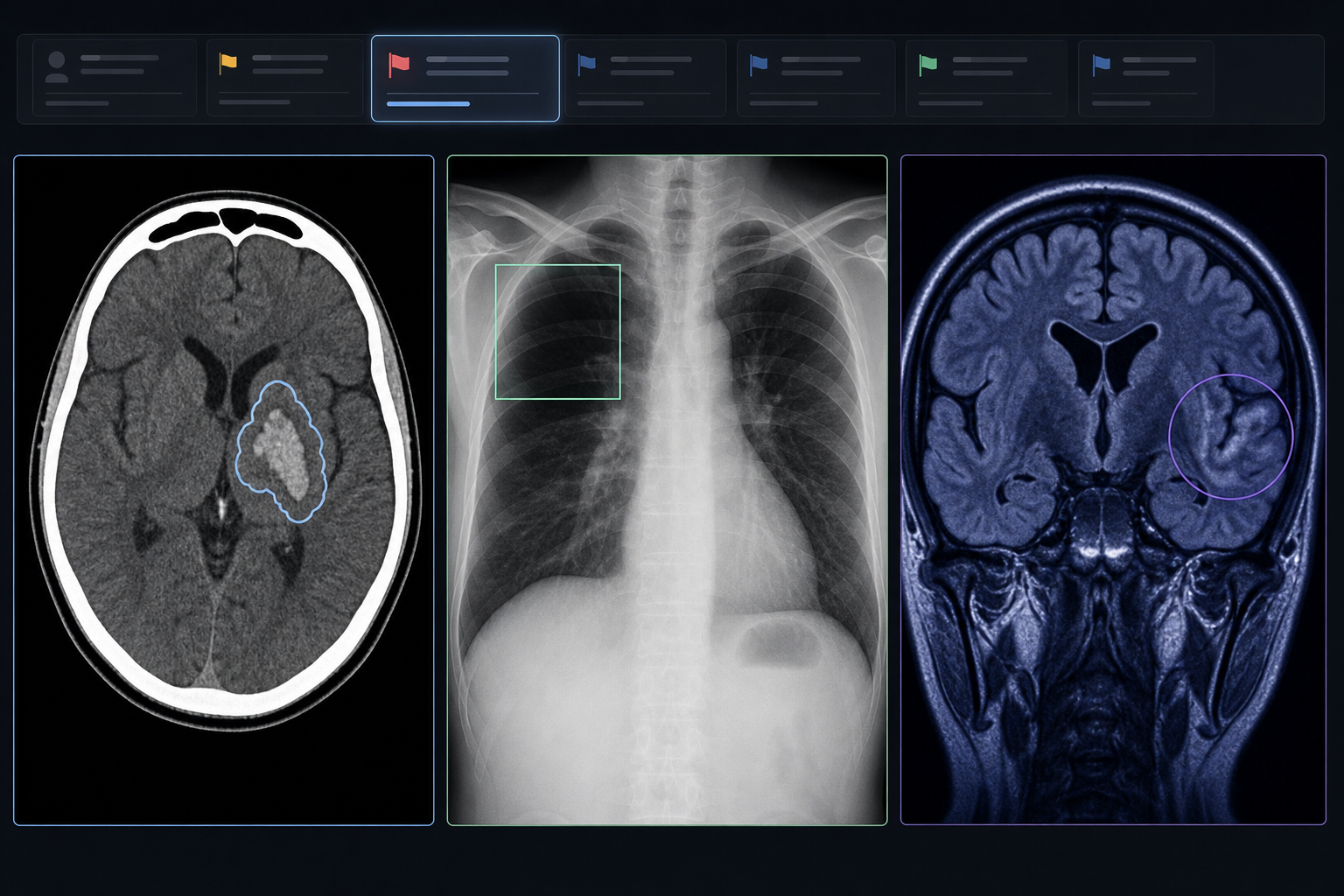
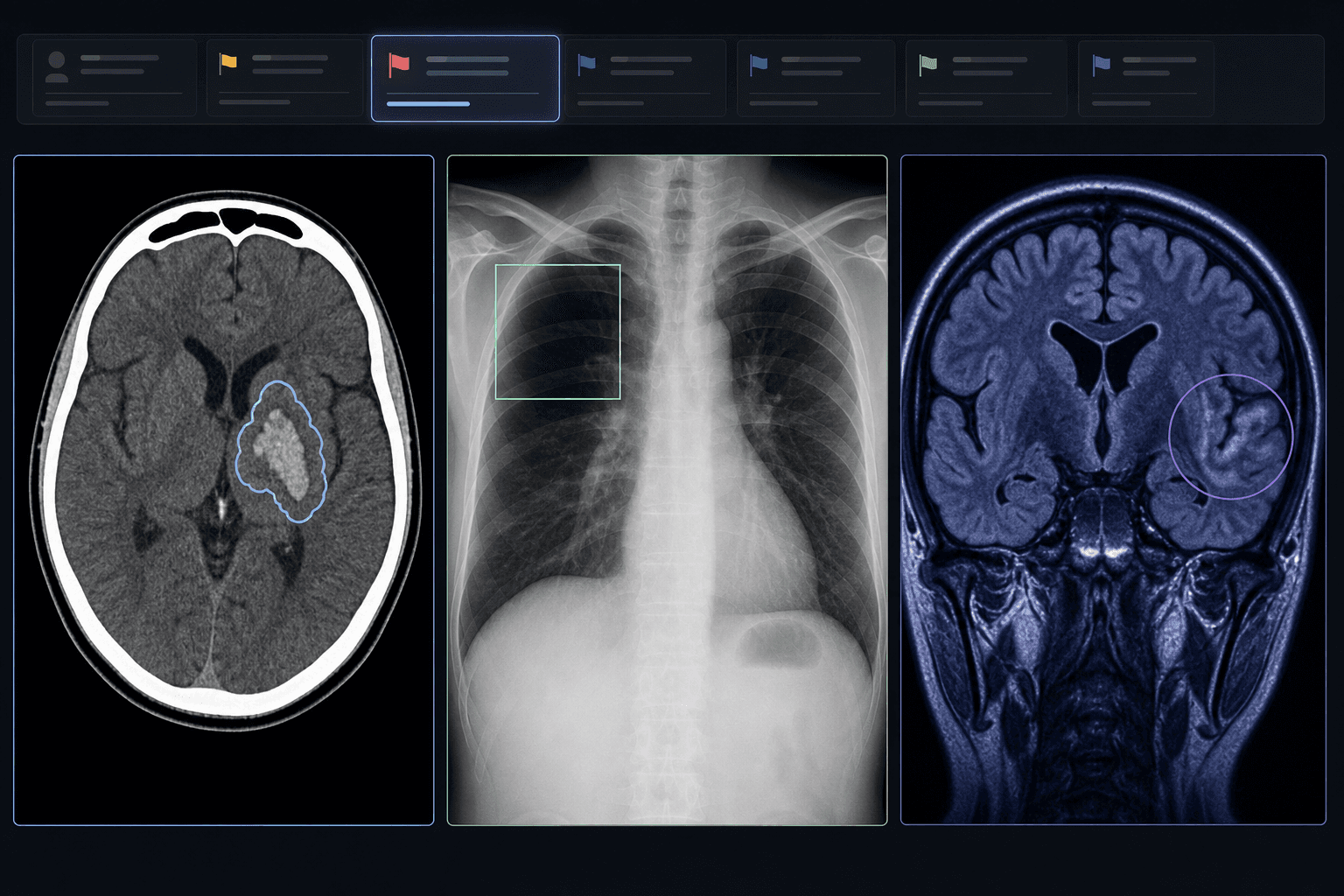
The Clinical Problem: Volume, Shortage, and Worklist Inadequacy
Radiology departments face a structural mismatch between imaging volume and interpretive capacity. Scan volumes have grown steadily across emergency and outpatient settings, while the physician pipeline has not kept pace. The AAMC projects a physician shortage of 13,500 to 86,000 by 2036, with radiology among the affected specialties — a range wide enough to reflect genuine uncertainty but narrow enough to signal sustained pressure on radiologist availability.
The conventional worklist management approach — first-in, first-out queue ordering — was designed for a world where imaging volume was lower and time-critical findings were rare enough that sequential review was acceptable. That assumption no longer holds in high-volume emergency settings. A patient with an intracranial hemorrhage or a large vessel occlusion may sit in the queue behind a routine outpatient study, not because any clinician chose to deprioritize them, but because the system has no mechanism to surface urgency automatically.
This is the operational gap that AI triage tools are designed to address. The primary clinical value proposition is not replacing radiologist interpretation — it is identifying which studies in the queue contain time-sensitive findings and elevating them before the radiologist would otherwise reach them. The distinction matters for how these tools should be evaluated and what evidence is actually relevant to their adoption.
Defining AI Triage in Radiology: CADt, CADx, and Worklist Prioritization
Three terms are frequently conflated in radiology AI discussions, and the distinctions carry real clinical and regulatory weight.
- Computer-aided detection and triage (CADt) refers to systems that identify the presence of a finding and generate an alert or notification — without providing a diagnosis. The FDA's CADt designation reflects this: the tool flags, not interprets. Most FDA-cleared radiology AI tools operate in this category.
- Computer-aided diagnosis (CADx) refers to systems that provide diagnostic characterization — classifying a finding as benign or malignant, grading severity, or quantifying a measurement. These tools face a higher regulatory bar and are less common in the current cleared landscape.
- Worklist reprioritization is a workflow integration mode, not an AI category. A CADt system can generate an alert that appears as a widget in the viewer without changing the order in which studies appear on the radiologist's queue — or it can actively reorder the queue so that flagged studies surface at the top. These are functionally different interventions with different measurable effects.
The workflow integration mode is one of the most underappreciated variables in radiology AI evaluation. A 2024 prospective study of Aidoc's ICH triage tool at the University of Alabama at Birmingham — covering 9,954 exams — found no significant improvement in report turnaround time for ICH-positive studies when the AI operated through a widget interface that did not integrate with PACS worklist ordering. The study authors explicitly identified active worklist reprioritization, not the AI algorithm itself, as the mechanism necessary for turnaround improvement. This finding has direct implications for procurement: the same FDA-cleared tool can produce meaningfully different real-world results depending on how it is integrated.
CT Triage: Applications, Evidence, and FDA Status by Indication
CT is the modality with the deepest AI triage evidence base and the largest number of FDA-cleared tools. Four indications have accumulated enough published evidence to assess: intracranial hemorrhage on non-contrast CT, pulmonary embolism on CT pulmonary angiography, stroke and large vessel occlusion on CT angiography, and lung nodule detection on chest CT.
Intracranial Hemorrhage on Non-Contrast CT
ICH triage on non-contrast head CT has the most extensive prospective evidence base of any CT AI triage indication. Multiple FDA-cleared tools exist, including Aidoc BriefCase (multiple 510(k) clearances), Viz.ai ICH, Rapid ICH, and CINA-ICH. Reported sensitivity across validated studies ranges from approximately 87% to 99%, with specificity generally above 94%.
The most frequently cited outcome data come from a single-center pre-post study by Kotovich et al. evaluating 587 cases, which found 30-day all-cause mortality declined from 27.7% to 17.5% after AI implementation, with 120-day mortality also reduced. Modified Rankin Scale scores at discharge improved modestly. These are clinically meaningful signals — but the study design (single-center, pre-post, n=587) limits causal inference. Concurrent changes in clinical protocols, staffing, or patient mix cannot be ruled out.
The counterpoint from prospective data is important. A large prospective single-center evaluation at the University of Alabama at Birmingham assessed 9,954 exams and 7,371 patients using Aidoc's ICH triage tool. Radiologists alone outperformed AI alone on accuracy (99.5% vs. 93.0%), sensitivity (98.6% vs. 87.8%), and specificity (99.8% vs. 94.3%). Radiologists with and without AI showed no significant difference across any diagnostic metric. Mean report turnaround for ICH-positive exams was 147.1 minutes without AI versus 149.9 minutes with AI — a non-significant difference (p=0.11). The widget interface did not connect to PACS worklist reordering.
Pulmonary Embolism on CT Pulmonary Angiography
PE triage on CTPA has a growing evidence base with a critical real-world nuance: the magnitude of benefit depends heavily on when the study is performed and how the AI integrates with the worklist.
A retrospective single-center study by Batra et al. (UT Southwestern, 2,501 CTPA exams) found that AI-driven worklist reprioritization using Aidoc BriefCase reduced mean report turnaround for PE-positive exams from 59.9 to 47.6 minutes — a 12.3-minute reduction. Wait time fell from 33.4 to 21.4 minutes. Actual read time did not differ significantly, confirming that the mechanism is queue positioning, not faster interpretation.
A prospective study with FDA-affiliated authorship, published in JACR 2025 and covering more than 11,000 adult CTPA scans from the University of Chicago (2018–2022), found a 32.2% turnaround reduction during regular work hours (68.9 to 46.7 minutes). During off-hours, the reduction was only 6.3% (44.8 to 42.0 minutes) — a difference the authors characterized as not clinically significant. A computational model (QuCAD) confirmed that time savings are sensitive to workflow parameters including radiologist staffing levels, exam interarrival time, disease prevalence, and AI diagnostic performance. The authors stated explicitly that time-saving benefits may not occur in every clinical scenario.
A separate prospective study with historical controls by Topff et al. addressed incidental PE in an oncology population — 11,736 chest CT scans in 6,447 patients at the Netherlands Cancer Institute. AI sensitivity for incidental PE was 91.6%, specificity 99.7%, and NPV 99.9%. Median detection and notification time fell from 7,714 minutes under routine workflow to 87 minutes with AI-based worklist prioritization. Missed incidental PE rate declined from 44.8% to 2.6% (p<0.001). The limitation is population specificity: oncology patients have higher IPE prevalence, and performance may not generalize to lower-prevalence settings.
Stroke and Large Vessel Occlusion on CT Angiography
LVO detection on CTA provides the strongest patient-outcome signal in the CT triage landscape. Viz.ai received FDA clearance for LVO detection in February 2018 — one of the earliest radiology AI clearances. Published data cited in a 2025 JACR review report CTA-to-puncture time reductions from 216 to 127 minutes and transfer time reductions from 132 to 110 minutes following implementation, with sensitivity of 96.3% and specificity of 93.8% in validation data. These are process-outcome improvements with downstream clinical relevance given the time-sensitivity of mechanical thrombectomy.
In March 2026, Harrison.ai received FDA 510(k) clearance for acute infarct triage on non-contrast CT brain — the company's 9th FDA clearance and second Breakthrough Device Designation to reach authorization. The system is distinct from LVO tools: it evaluates ischemic tissue injury across six vascular territories (ACA, MCA, PCA, cerebellar, basilar, watershed) on non-contrast CT, analyzing the parenchymal consequence of occlusion rather than the vessel itself. Reported sensitivity is up to 89.2% on thin-slice CT and 85.7% on thick-slice. For comparison, an FDA-cleared non-contrast CT LVO triage comparator showed 63.5% sensitivity and 95.1% specificity for vessel occlusion only — a different clinical question.
Lung Nodule Detection on Chest CT
FDA-cleared AI tools for lung nodule detection and quantification exist from multiple vendors, including Qure.ai (lung nodule quantification, 510(k) cleared). The clinical context is lung cancer screening under USPSTF and NLST-derived guidelines. AI tools in this space primarily assist with nodule detection, size measurement, and Lung-RADS categorization rather than worklist triage in the emergency sense. The evidence base for nodule AI is largely retrospective and device-validation focused. Active clinical trials are registered but prospective outcome data linking AI-assisted nodule detection to mortality reduction remain sparse as of mid-2026.
MRI Triage: Narrower Evidence Base, Established Clearances
MRI AI triage has a more limited prospective evidence base than CT, reflecting both the modality's lower throughput in emergency settings and the complexity of MRI acquisition protocols that make standardized AI development more challenging.
For acute stroke, Viz.ai and RapidAI both hold FDA clearances for LVO detection and MRI-based stroke assessment. The clinical use case is time-critical: identifying large vessel occlusion or penumbra-core mismatch on DWI/FLAIR sequences to guide thrombectomy candidacy. The published evidence for MRI-based stroke AI follows a similar pattern to CTA — device validation studies with acceptable sensitivity and specificity, supported by implementation data showing process-time improvements.
Brain MRI quantification tools — including Icometrix, NeuroQuant, and Quantib — are FDA-cleared for volumetric measurement of structures relevant to MS, dementia, and epilepsy. These are measurement tools, not triage tools in the workflow-prioritization sense. They support longitudinal monitoring and diagnostic characterization rather than emergency worklist elevation.
- No prospective MRI triage RCT data exist as of mid-2026. Most MRI AI evidence is retrospective or device-validation level.
- Post-market monitoring mechanisms for MRI AI tools are rarely described in published literature — a gap noted across neuroimaging AI products generally.
- Harrison.ai's 13 total FDA-cleared radiological indications span both CT and MRI, with the non-contrast CT brain portfolio being the most recently expanded.
- Algorithm drift — the degradation of model performance as the deployment data distribution shifts from the training distribution — is a documented concern for MRI AI given scanner heterogeneity across field strengths and acquisition protocols.
Chest X-Ray Triage: Specific Tools, Clearances, and Global Context
Chest X-ray AI triage has attracted substantial regulatory activity, with multiple distinct FDA clearances across different vendors and indication sets. The evidence base is primarily diagnostic accuracy data — sensitivity, specificity, and AUC — rather than clinical outcome studies. This distinction matters: high AUC on a validation dataset does not automatically translate to improved patient outcomes in deployment.
BraveCX: Pneumothorax and Pleural Effusion Triage
Bering's BraveCX received FDA 510(k) clearance in December 2023 for triage and notification on adult chest X-rays. The tool was developed using findings from over one million chest X-rays and fine-tuned with more than 50,000 labeled radiographs. Reported performance: AUC 0.98 for pneumothorax and 0.96 for pleural effusion, with specificity of 95–97% across both indications. The tool is positioned for emergency department risk stratification, prioritizing studies with high-acuity findings for expedited review.
Aidoc: Pneumothorax on X-Ray
Aidoc received FDA 510(k) clearance for pneumothorax triage and notification on X-ray exams in March 2022 — its 8th FDA-cleared solution at that time. The tool operates across X-ray machines including portable units, automatically flags positive pneumothorax cases, and generates physician notifications. This clearance extended Aidoc's platform from CT-only to the higher-volume plain radiograph modality, where pneumothorax is a time-sensitive finding in trauma and post-procedural settings.
Qure.ai qXR-Detect: Six-Indication Clearance and PCCP Distinction
In February 2026, the FDA granted 510(k) Class II clearance for Qure.ai's qXR-Detect — a CADe solution covering six indication categories on chest X-ray in a single clearance: lung, pleura, mediastinum/hila/heart, bone, hardware, and other findings. This '6 in 1' clearance completes Qure.ai's qXR product suite.
Qure.ai's total FDA-cleared indications now stand at 26 across 9 products spanning X-ray and CT, with more than 65 CE-certified indications globally. Existing U.S. clearances include lung nodule quantification, pneumothorax and pleural effusion triage/notification, and multiple neurocritical findings (ICH, cranial fracture, midline shift).
A regulatory differentiator: qXR-Detect is currently the only chest X-ray CADe device cleared by the FDA with a Predetermined Change Control Plan (PCCP). A PCCP allows the developer to update the algorithm — within pre-specified bounds — without submitting a new 510(k) clearance for each modification. This is a meaningful operational advantage in a field where model updates are frequent and re-clearance timelines can lag deployment needs.
Tuberculosis Screening and Global Health Applications
Chest X-ray AI for TB screening represents a distinct application context — high-volume, resource-constrained settings where radiologist availability is severely limited. Qure.ai's qXR platform has been deployed in TB screening programs across multiple countries, with CE-marked indications for TB-related findings. The European market data from 2024 identifies 9 CE-marked products for tuberculosis, reflecting the global public health demand. In this context, AI is not augmenting a worklist — it is functioning as a primary screening filter in settings where no radiologist would otherwise review the image in a timely manner. Evidence from TB screening deployments includes multi-country prospective data, though generalizability across TB prevalence settings and patient populations requires careful evaluation.
| Tool | Modality | Indication | FDA Status | Key Performance Metric | Study Design |
|---|---|---|---|---|---|
| Aidoc BriefCase | Non-contrast CT | ICH | 510(k) cleared (multiple) | Sensitivity ~87–99% | Prospective single-center (n=9,954); retrospective multi-site |
| Viz.ai | CTA | LVO / Stroke | 510(k) cleared (Feb 2018) | Sensitivity 96.3%, Specificity 93.8% | Retrospective implementation; pre-post |
| Harrison.ai | Non-contrast CT | Acute infarct | 510(k) cleared (Mar 2026) | Sensitivity 89.2% (thin-slice) | Device validation |
| Aidoc BriefCase | CTPA | Pulmonary embolism | 510(k) cleared | 32.2% TAT reduction (regular hours) | Prospective (n=11,000+); retrospective (n=2,501) |
| Topff et al. tool (Aidoc) | Chest CT | Incidental PE | 510(k) cleared | Missed IPE 44.8%→2.6% | Prospective with historical controls (n=11,736) |
| BraveCX | Chest X-ray | Pneumothorax, pleural effusion | 510(k) cleared (Dec 2023) | AUC 0.98 PTX, 0.96 PE; Spec 95–97% | Device validation |
| Aidoc | Chest X-ray | Pneumothorax | 510(k) cleared (Mar 2022) | Not publicly reported | Device validation |
| Qure.ai qXR-Detect | Chest X-ray | 6 indication categories | 510(k) cleared (Feb 2026) with PCCP | 26 total US indications | Device validation; multi-country deployment |
| Icometrix / NeuroQuant | Brain MRI | Volumetric quantification | 510(k) cleared (measurement only) | Volumetric accuracy vs. manual | Retrospective validation |
Evidence Quality Across Indications: What the Literature Actually Shows
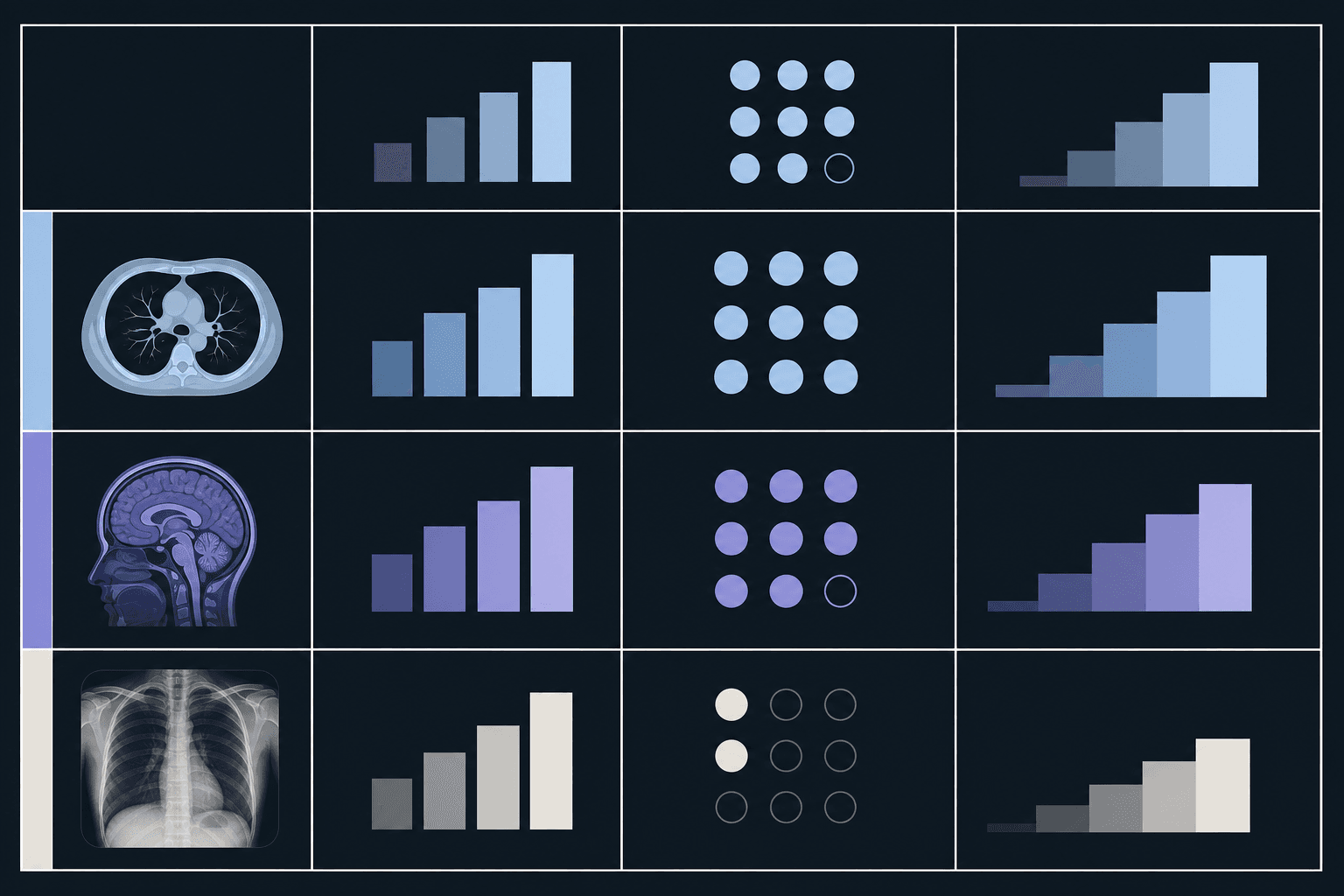
The individual study record for radiology AI triage appears broadly positive: across 48 real-world clinical studies included in a 2024 systematic review published in npj Digital Medicine, 67% of studies measuring time for tasks reported reductions after AI implementation. That headline number, however, does not survive aggregation.
Three separate meta-analyses of 12 comparable studies within that review found no statistically significant effects after AI implementation. For CT reading times, the standardized mean difference was −0.60 (95% CI −2.02 to 0.82; p=0.30), with I²=96.35% — indicating near-complete heterogeneity across studies. For ICH turnaround time specifically (three Aidoc studies), the SMD was 0.03 (95% CI −0.50 to 0.56; p=0.84), with I²=83.75%. The confidence intervals span both meaningful benefit and meaningful harm.
| Indication | Modality | Best Available Study Design | Multicenter? | Representative N | Key Metric | Outcome Level | COI Prevalent? |
|---|---|---|---|---|---|---|---|
| ICH detection | Non-contrast CT | Prospective single-center | No | 9,954 exams | No TAT improvement (widget-only) | Process | Yes (many studies) |
| ICH outcomes | Non-contrast CT | Single-center pre-post | No | 587 cases | 30-day mortality 27.7%→17.5% | Clinical (limited) | Not reported |
| PE triage | CTPA | Prospective (FDA-affiliated) | No (single-center) | 11,000+ scans | 32.2% TAT reduction (regular hours) | Process | Yes |
| Incidental PE | Chest CT | Prospective with historical controls | No | 11,736 scans | Missed IPE 44.8%→2.6% | Process / diagnostic | Not declared |
| LVO / Stroke | CTA | Retrospective implementation | No | Not reported | CTA-to-puncture 216→127 min | Process | Yes |
| Acute infarct | Non-contrast CT | Device validation | No | Not reported | Sensitivity 89.2% (thin-slice) | Diagnostic | Industry |
| Pneumothorax | Chest X-ray | Device validation | No | 1M+ training CXRs | AUC 0.98 | Diagnostic | Industry |
| 6-indication CXR | Chest X-ray | Device validation + global deployment | Multi-country (deployment) | Not specified | 26 US cleared indications | Diagnostic | Industry |
| Brain volumetrics | MRI | Retrospective validation | No | Not specified | Volumetric accuracy | Diagnostic (measurement) | Industry |
The pattern across indications is consistent: process-level improvements (turnaround time, wait time, alert speed) are the most commonly demonstrated benefit. Diagnostic accuracy metrics are available for most cleared tools. Clinical outcome data — mortality, functional status, length of stay — are rare, and when present, come from single-center pre-post designs with significant confounding risk.
FDA Regulatory Status: Clearance Pathways, Product Counts, and What Clearance Does Not Guarantee
As of 2024, approximately 527 FDA-cleared radiology AI tools exist in the U.S. market — representing roughly 76% of all cleared healthcare AI algorithms. In Europe, 222 CE-marked commercial AI products were documented in the radiology space as of October 2024, a 122% increase from 2021. CT leads with 89 CE-marked AI products; MRI follows with 66. By subspecialty, neuroimaging and chest imaging top the list with 73 and 71 CE-marked products respectively. Product clearances peaked in 2023, with a slight decline in 2024 suggesting early market stabilization.
The dominant clearance pathway for radiology AI triage tools is 510(k), which requires demonstration of substantial equivalence to a legally marketed predicate device. De Novo authorization — used when no predicate exists — has been applied to some novel AI triage tools. PMA (Premarket Approval), which requires clinical trial evidence of safety and effectiveness, is rarely used for radiology AI software.
A regulatory differentiator worth noting: the Predetermined Change Control Plan (PCCP) pathway, used by Qure.ai for qXR-Detect, allows a developer to update the AI algorithm within pre-specified bounds without filing a new 510(k). For tools that require ongoing retraining as deployment data accumulates, this is a meaningful operational advantage. As of mid-2026, qXR-Detect remains the only chest X-ray CADe device with a PCCP clearance.
- ~527 FDA-cleared radiology AI tools in the U.S. as of 2024 (76% of all cleared healthcare AI algorithms)
- 222 CE-marked radiology AI products in Europe as of October 2024 — 122% growth since 2021
- CT leads CE-marked product counts (89), followed by MRI (66) and X-ray (46)
- Neuroimaging (73) and chest imaging (71) are the top CE subspecialties; pneumothorax has 16 CE products, tuberculosis 9
- Product approvals peaked in 2023, with 2024 showing stabilization — a signal of market maturation rather than growth deceleration
- PCCP clearance (Qure.ai qXR-Detect) is the current regulatory frontier for chest X-ray AI, enabling algorithm updates without re-clearance
Known Limitations: Bias, Generalizability, Workflow Heterogeneity, and Monitoring Gaps
The limitations of the radiology AI triage evidence base are structural, not incidental. They recur across indications and are documented in the literature rather than inferred from absence of evidence.
- Retrospective design dominance. The majority of published radiology AI triage studies are retrospective and single-center. The 2024 npj Digital Medicine systematic review noted that most AI systems lack rigorous prospective and multicenter clinical trial validation. Single-center retrospective studies cannot reliably establish generalizability across different institutions, patient populations, scanner hardware, or acquisition protocols.
- Workflow integration heterogeneity. The mode of AI integration — widget alert vs. active worklist reprioritization — is the primary determinant of turnaround improvement, as demonstrated by the AJR ICH prospective study (null result with widget-only) versus the Batra et al. PE study (significant reduction with active reprioritization). Studies that do not specify integration mode cannot be meaningfully compared.
- Off-hours performance gap. The FDA-affiliated JACR 2025 PE triage study found only a 6.3% turnaround reduction during off-hours versus 32.2% during regular hours. Off-hours radiology staffing patterns — fewer radiologists, different queue dynamics — substantially reduce the benefit of worklist reprioritization. This gap is rarely reported in individual studies and must be considered in deployment planning.
- Industry conflict of interest. More than 50% of studies included in the 2024 npj Digital Medicine meta-analysis declared relevant conflicts of interest. Only 4 of 48 studies followed a reporting guideline. This does not invalidate positive findings, but it requires that readers apply additional scrutiny to effect size claims from industry-affiliated research.
- FDA clearance as point-in-time validation. Clearance reflects performance against a specific dataset at a specific time. Algorithm drift — performance degradation as deployment data diverges from training data — is a documented risk that is rarely addressed in published AI product literature. Post-market monitoring mechanisms are infrequently described.
- Market saturation signals. Product approvals peaked in 2023, with stabilization in 2024. Commentary from industry observers has flagged tool fatigue — the risk that radiologists managing dozens of disconnected AI alert systems will disengage from individual alerts — as a real operational concern in high-volume deployments.
- Limited clinical outcome data. Studies measuring downstream patient outcomes (mortality, functional status, length of stay) are rare across all CT, MRI, and chest X-ray AI triage indications. The Kotovich et al. ICH mortality data (30-day mortality 27.7% to 17.5%) is the most frequently cited clinical outcome finding, but it comes from a single-center pre-post design with 587 patients — insufficient to establish causality.
Deployment Considerations: Platform vs. Standalone, PACS Integration, and Local Validation
For radiology administrators and health IT procurement professionals, the evidence reviewed above has direct operational implications. The gap between published performance and real-world deployment outcomes is not a failure of the underlying algorithms — it is a function of how those algorithms are integrated into clinical workflows.
Platform vs. Standalone Architecture
Standalone AI tools — single-indication alerts delivered through a separate interface — carry inherent tool fatigue risk. A radiologist managing separate alert streams for ICH, PE, pneumothorax, LVO, and lung nodules from five different vendors faces a cognitive overhead that can erode the attention value of each individual alert. Platform approaches that consolidate multiple AI indications into a single integrated workflow layer reduce this fragmentation, though they introduce vendor dependency and integration complexity.
The depth of PACS integration is the single most important technical variable in predicting real-world benefit. An AI tool that generates an alert but does not reorder the PACS worklist will not improve turnaround time for flagged studies, regardless of its detection accuracy. Procurement specifications should require active worklist reprioritization as a functional requirement, not an optional feature.
Local Validation Before Deployment
Published performance metrics from validation studies or multi-center deployments should not be assumed to transfer directly to a new institution. Disease prevalence, patient demographics, scanner hardware, acquisition protocols, and radiologist staffing patterns all affect the realized benefit of AI triage. The QuCAD computational model developed in the context of the JACR 2025 PE study formalizes this: time-saving benefit is a function of examination interarrival time, number of radiologists, radiologist read time, disease prevalence, and AI diagnostic performance — not of AI accuracy alone.
Local validation — prospective monitoring of turnaround times, alert rates, false positive burden, and radiologist workflow before and after AI deployment — is necessary to confirm that published benefits translate to the local environment. This is not a one-time exercise: algorithm drift means that performance should be monitored continuously, with defined thresholds for triggering re-evaluation.
Deployment Stage by Indication
- ICH on non-contrast CT: Broad clinical deployment. Multiple FDA-cleared tools in active use across U.S. health systems. Evidence for turnaround benefit is strongest when active worklist reprioritization is implemented; widget-only deployments may not demonstrate measurable benefit.
- PE on CTPA: Broad clinical deployment. Turnaround benefit is context-dependent — strongest during regular hours with high exam volume and adequate staffing. Off-hours benefit is minimal per current prospective data.
- LVO / Stroke on CTA: Broad clinical deployment, particularly in comprehensive stroke centers. Viz.ai has the longest post-clearance deployment record and the strongest process-outcome data in this indication.
- Acute infarct on non-contrast CT (Harrison.ai): Early deployment phase. FDA clearance received March 2026. Real-world deployment data are not yet available at scale.
- Chest X-ray pneumothorax and pleural effusion: Active deployment in ED settings. Multiple FDA-cleared tools. Diagnostic accuracy data are strong; clinical outcome data are not established.
- Multi-indication chest X-ray (Qure.ai qXR-Detect): Recently cleared (February 2026). Global deployment in TB screening and resource-limited settings is more established than U.S. emergency department deployment.
- Brain MRI volumetric quantification: Active deployment for longitudinal monitoring in MS, dementia, and epilepsy. Not a triage tool; used for measurement and characterization in outpatient and subspecialty neurology contexts.
Comments
Join the discussion with an anonymous comment.